The blog · Pipeline Strategy · 8 min
What LinkedIn outreach strategy works in 2026?
Sort LinkedIn activity by readiness and awareness, comment before you connect, and keep nurturing the ones who are not ready instead of dropping them.
The LinkedIn outreach that works in 2026 spends its effort on people who already know you or are visibly in motion, and warms them up before it asks for anything. In our own sends, a cold connection request to a qualified stranger is accepted about 21 percent of the time, while the same request to someone who just reacted to a competitor's post is accepted 62 percent of the time. The strategy follows from that gap: sort LinkedIn activity by how ready people are to buy and how well they know you, comment before you connect, and keep nurturing the ones who are not ready instead of dropping them.
Why does the old LinkedIn outreach playbook stop working?
The old LinkedIn playbook stops working because the people it targets have learned to read it. More sellers prospect on LinkedIn every year, so a connection request that arrives with a pitch attached is now a signal in itself: the recipient knows what the next message will be. Pitching on the first touch ends the conversation before it starts.
The second failure is quieter. Most sales teams use LinkedIn only to prospect: connect, ask for a meeting, and if the meeting does not happen, stop. The lead stays in the network as one more connection nobody talks to. That is a waste of the most valuable thing the channel offers, which is a qualified person who has already accepted you and can see everything you post. About 5 percent of B2B buyers are in market at any moment, so most of the people you connect with will not buy this quarter, and some of them will buy next year from whoever they remember. Source: John Dawes, Ehrenberg-Bass Institute with the LinkedIn B2B Institute, The 95-5 Rule, 2021
What are the three Cs of a LinkedIn pipeline?
A LinkedIn pipeline runs on three activities: content, comments and conversations. Content is what you post: it makes an impression of who you are on everyone who sees it, and the people who react to it repeatedly are telling you something. Comments are what you write on other people's posts: a useful comment on a prospect's post is a touch they notice, and it is also seen by their own network. Conversations are the direct messages, which are the easy part once the first two have done their work.
None of the three works without a precise picture of who you sell to and what you offer them. Views and reactions from the wrong people feel like progress and convert nothing, so the ideal customer profile and the offer come first, along with a profile page for every person on the team that says what they help with and where to go next.
How do you sort LinkedIn leads by readiness and awareness?
LinkedIn leads sort cleanly on two questions: how ready is this person's company to buy, and how well do they know you. Those are the two axes of the Demand Compass, readiness to buy and brand awareness, and LinkedIn shows evidence for both in plain sight. Each combination gets a different move.
| Where they sit | What it looks like on LinkedIn | What to do |
|---|---|---|
| Ready and aware | A positive reply to a message, a reaction to a post about your offer, reactions to three or more of your posts in one week | Treat as sales-ready: call, message, email, fast |
| Aware, not ready | Follows you, reacts to your posts now and then, already a first-degree connection | Nurture with comments, useful messages and content, no pitch |
| Ready, not aware | Reacts to a competitor's or a complementary tool's posts, or to posts about the problem you solve | Warm up with comments, then connect: these accept at the highest rates |
| Neither | Fits the profile, no visible activity | Last in line, and only once the three above are worked |
The middle row is the one most teams ignore. Those people are qualified, they know who you are, and they are not buying yet. If nobody talks to them until they are ready, they will not remember you when they are.
How do you find active, interested leads instead of a static list?
The best cold list on LinkedIn is built from people reacting to posts in your niche, not from a database export. Pick the voices your buyers already follow, the leaders, the competitors, the complementary tools, and collect the people who react to their posts. Everyone on that list has two properties a static list cannot promise: they are interested in the topic, and they are active on LinkedIn this month. A list pulled from a contact database or a Sales Navigator search tells you who fits, not who is paying attention, and many of those profiles have not been opened in a year.
The difference shows up in the numbers. In our deployments, a cold connection request to a qualified lead is accepted about 21 percent of the time and replied to about 17 percent. Followers of an adjacent solution accept at 41 percent and reply at 38. People who had just reacted to a competitor's posts accept at 62 percent. Source: automate rev.ops., our own sends, The Demand Compass, chapter 18
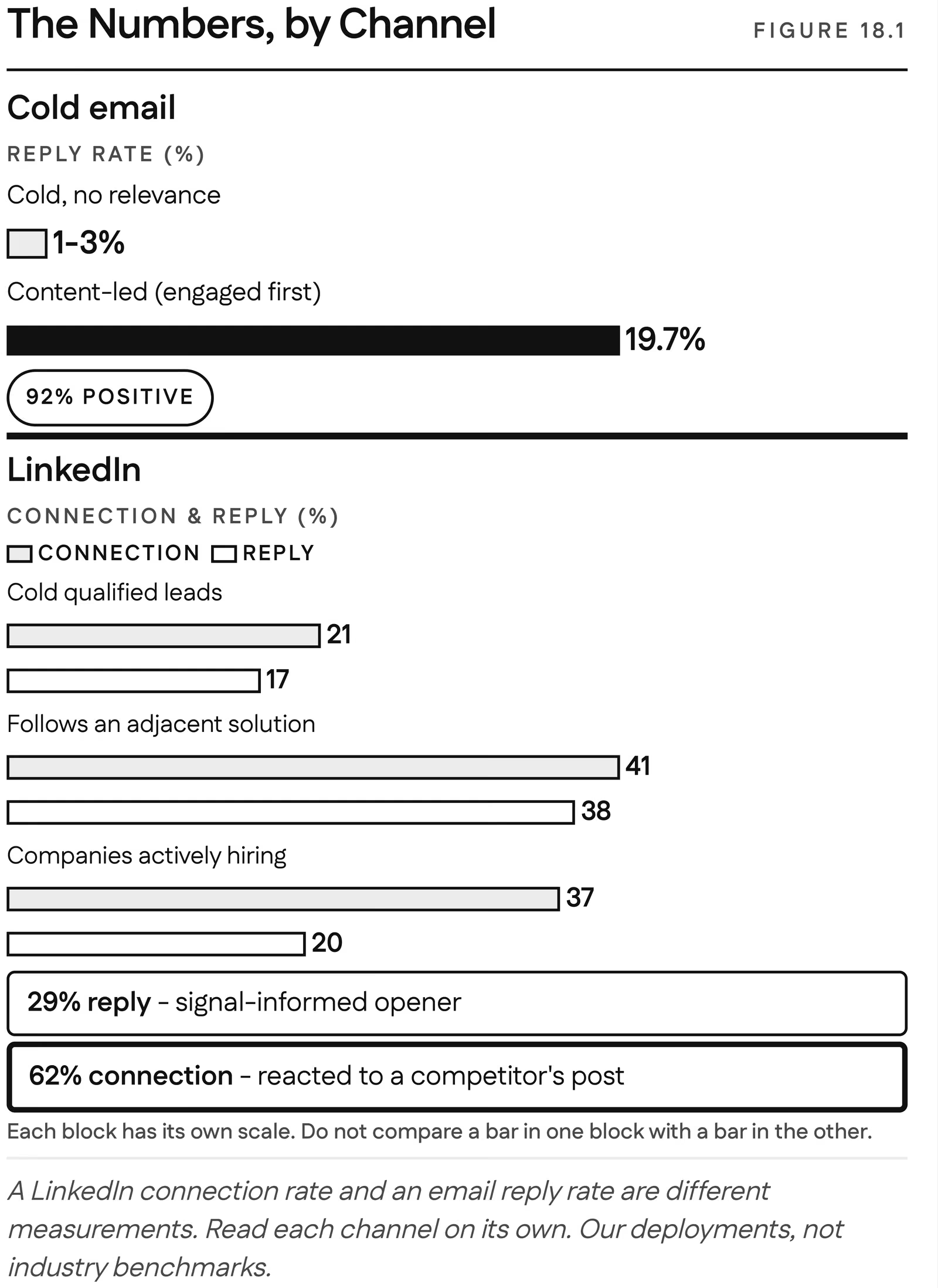
The full breakdown, including what happens after the reply, is in what LinkedIn connection and reply rates you should expect.
What does a warm-up sequence look like before the connection request?
A warm-up sequence makes you familiar before you ask to connect, so the request lands as the next step from someone they have already seen. This is the order we run:
- Qualify the reactors against the profile, then put the qualified ones into a commenting campaign: thoughtful comments on their own posts, in your field, for about two weeks.
- Send the connection request, without a pitch. Some will send you a request first.
- Wait around ten days for the request to land and be accepted.
- Once they accept, send a short sequence of three messages (the same logic as how many emails a cold sequence should have: a short round, then a clean stop), written from everything you know about them: their company, their role, and every interaction they have had with your posts, your site, your newsletter or your events.
- If there is no reply, rotate the sender, return them to the commenting campaign, and try again about a month later. Stop when it is clear they are not engaging.
- Read every reply for sentiment and send the positive ones to the team straight away, so a person answers while the conversation is warm.
The connection request should land as the next step from someone they have already seen, not as the first contact.
People who have just engaged with our content accept a connection request 90 to 100 percent of the time, against near 20 percent cold, which is why the comments come first. [source: automate rev.ops., our own sends, The Demand Compass, chapter 18] Nurture messages to people who are aware but not ready follow the same shape without the request: no pitch, something useful in each one, a guide, a video, an invitation.
How do you post three times a week without a content team?
Posting three times a week without a content team comes down to capturing ideas, because the writing is the easy part once you have them. Ideas are everywhere, in sales calls, in coaching sessions, in the posts of the people your buyers follow, in industry news, in your own webinars, and almost nobody writes them down. The system we use collects them from four places: the stories we tell on sales calls (never with the client's name), trending posts from voices in the market, news and newsletters, and recordings of our own workshops.
In Clay, the trending-posts part is one workflow. Find the voices in your market with a follower threshold, scrape their recent posts, and keep only the authors who posted more than three times in the past week whose posts drew more than a thousand reactions between them. An AI column reads each qualifying post and proposes a topic, an idea for your own post and a call to action. A second step reads your own past posts so drafts come back in your voice and follow title patterns that have worked for you before.
The output is a draft. A person edits it, adds the story only they can tell, and decides whether it ships. We are a Clay Solutions Partner and Clay runs inside most of what we build, but the judgement about what to post stays with the person whose name is on it.
Related questions
Should a LinkedIn connection request include a note?
Usually not on cold outreach. A request with a pitch in the note reads as the start of a sales sequence, and recipients increasingly decline it for that reason. Warm the person up with comments first, and a plain request does better. Email shows the same pattern: a good cold email reply rate is in the low single digits for a cold send and far higher for people who already know you.
How long should you wait between commenting and connecting?
We comment for about two weeks before sending the request, then allow around ten days for it to be accepted. The point is that the person has seen your name more than once before the request arrives.
Is automated LinkedIn outreach safe?
Automate the research and the drafting, not the judgement. Finding reactors, qualifying them, drafting messages and routing replies can all run on their own; what gets sent, and the reply to an interested person, should pass through a human in the loop.
What should you do with connections who never reply?
Keep them. They are aware of you and may not be ready, which puts them in the nurture group. Rotate the sender, return them to commenting, and try again weeks later with something useful rather than a repeat of the first message.