
The blog · GTM Systems · From The Demand Compass · 7 min
What is the dark channel in B2B buying?
Most of a B2B evaluation happens where no attribution tool is pointed, and the account doing it is visible months before your funnel would ever know.

The dark channel is the part of a B2B buying journey that happens where no attribution tool is pointed: the docs read twice, the repository starred, the pricing page visited five times, the question asked in a Slack group, the free trial poked at on a Tuesday night. It is dark because it is unlit, not because it is sinister; the signals are there, and the tools most teams run were built to see only the moment a person raises a hand on LinkedIn or a form. Most of the evaluation happens in the dark channel, weeks before anyone is willing to be seen, and the account doing it is visible months before a funnel would have known it existed as a buyer.
What do LinkedIn and form fills actually capture?
Picture the last serious purchase your own company made, a platform your team had to live with. By the time anyone spoke to a salesperson, the real evaluation was mostly done, and almost none of it would have shown up in a vendor's marketing system as a buying signal. Most demand engines, even sophisticated ones, still reduce intent to a declared action: someone engaged on LinkedIn, or someone filled out a form. A form comes in many shapes, an event registration, a webinar signup, a lead-magnet download, a demo request, and every one shares the same trait: the prospect chose to raise a hand. What that captures is a title, a company, a reaction on a post, and an email traded for a piece of content.
That is not nothing. But it leaves out the entire evaluation: the reading, the comparing, the testing, the asking around, the quiet circling that happens for weeks before anyone is willing to be seen. The most decision-relevant behavior a buyer produces is exactly the behavior your two favorite channels were never built to see.
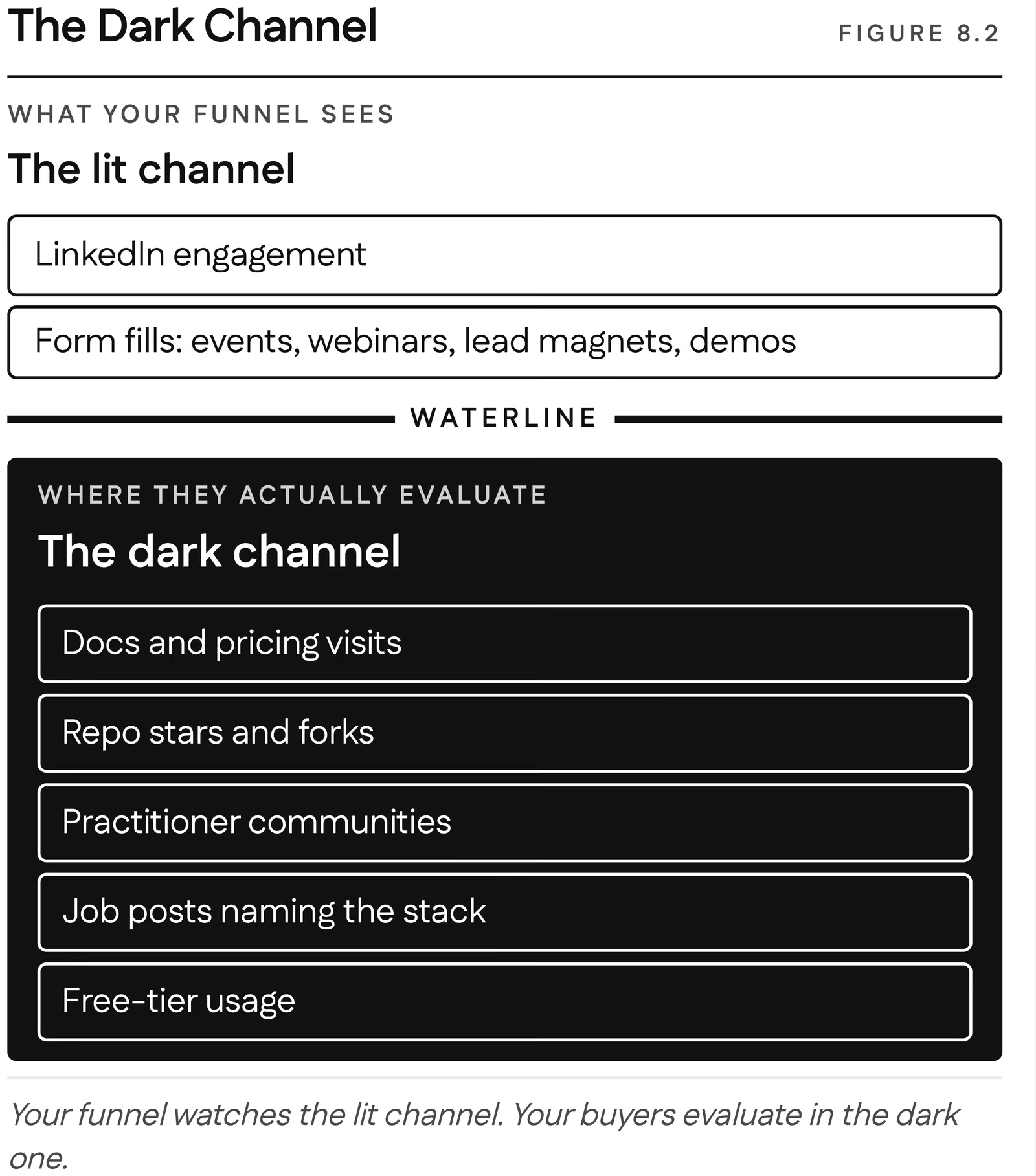
Where does B2B buying intent actually form?
A developer-tools company sees an account light up as stars and forks on its repository, the same engineers reading the SDK docs three times in a week, and an infrastructure role posted that names the exact problem the product solves. None of it is a lead. All of it says a team is building, and building near you. A cybersecurity company watches for a different shape: a public incident in the account's space, a freshly hired CISO inside her first ninety days, and repeated visits to the compliance and pricing pages. A data or AI-infrastructure company reads the stack itself: job posts that name the tools they are standing up, community questions about the problem, an engineering manager who keeps engaging with the founder's posts. Three markets, one pattern. The signal forms in the work, not on a form.
And the dark part of the journey now includes the machines doing the research. Demandbase measured monthly ChatGPT referrals to B2B websites rising from about 645,000 to 2.6 million in a single year, a 303 percent increase. Buyers are asking an assistant the questions they used to type into a search bar, in a place no ad reaches and no form can gate. Source: Demandbase, platform data on ChatGPT referrals to B2B websites, 2026
Why do dark channel signals arrive messy?
There is a fair reason most teams do not use these signals. The website visit is anonymous, the repository star is one engineer, the community question comes from a username, not a job title. None of it arrives stamped with the decision-maker's name, so teams throw it away, deciding that because the signal is not clean, it is not usable. That is the mistake.
The discipline is to stop demanding that a signal identify the buyer and start letting it identify the account. You need to know that this company has five people touching technology next to yours, an open role that hints at the project, and three visits to your pricing page this month. Roll the fragments up and the picture resolves. The unit of analysis was never the person.
The unit of analysis was never the person.
David ran into this from the vendor side a while ago, in a demo of a tool built to capture developer intent: GitHub activity, community activity, website behavior, packaged for companies selling to engineers. It was a good tool. What struck him was that every one of those signals was already capturable, and that we had been assembling the same picture for clients inside our own stack. The vendor's real work was naming the channel so a buyer could believe it existed; the teams paying for it were buying permission to finally look where the signals already were. Most teams do not have a signal problem. They have a looking problem.
What does ignoring the dark channel cost?
The cost shows up as timing. When a company starts evaluating, there is a window: a new revenue leader's first ninety days, the thirty to sixty days after a funding announcement when budget is fluid, the few weeks a team spends comparing options before they shortlist. Watching only LinkedIn and forms, you find out at the very end, if at all, and by then someone else got the first conversation, which is worth more than the next five.
We watched the cleanest version of this with a single piece of content. Instead of locking a playbook we had written behind a form, David sent it to people who had already engaged with us in some small way: a like, a comment, a visit. Nearly one in five replied, close to twenty percent, against the one to three percent you would get sending the same note cold. The playbook did not change. The only thing that came first was a flicker of attention in the dark channel, and that flicker was worth several times the response.
Why is the person who signals rarely the one who signs?
Lighting the channel solves half the problem. You can map your decision-maker perfectly and still never see her do a single thing. The CFO does not clone your repository. The CISO does not test your SDK at night. Senior buyers leave almost no behavioral signal, and it is tempting to read that silence as a lack of interest. It is not. The silence is the role: people at that altitude do not do the hands-on evaluation, so they do not generate its signals.
So the job is not to wait for the signer. It is to build a bridge to her from the people who do leave signals, the engineer reading your docs, the ops person comparing two tools in a spreadsheet, rolled up into an account-level case and translated into the language of her problem rather than yours. Not "your engineers like our docs," but "you have an initiative forming that we make cheaper, faster or safer, and here is the evidence it is already underway."
How much of the dark channel can you instrument?
The dark channel is not unobservable; it is uninstrumented. Each part of it has a sensor. Web de-anonymization resolves the traffic you already pay to attract into named companies, and better, to the page, because a visit to pricing or docs is worth ten times a visit to your blog. Developer intent watches repositories, documentation and free-tier behavior. Community listening catches the unprompted "has anyone used this?" in Reddit threads and Slack groups. An events feed watches funding rounds, leadership hires and regulatory shifts continuously instead of catching one by chance.
None of this is limited to companies with GitHub repositories and developer communities; you just have to find where the dark channel lives for your buyers. Marcos learned this in commercial cleaning. No repository to watch, no docs page to instrument. So where does a cleaning company's buying readiness show up? In new building developments: a development going up is a future cleaning contract forming. The sensor we built mapped the square footage of new developments across states and turned construction data into a readiness feed. The signal was out there, firing, and nobody in that market was instrumented to catch it.